
There is a particular kind of silence in Colombia’s coffee region at six in the morning. Mist sits in the valleys, the guadua stalks creak, and the first birds begin to talk across the canopy. Some buildings fight that moment. Others seem to have been listening to it all along. This is a guide to the second kind: architecture inspired by the forest, and what it means to design, and to stay, in Quindío.
Why the coffee region asks for a different kind of architecture
Quindío is a landscape of steep green folds, rivers cutting through volcanic soil, and a climate that is gentle year-round. The traditional answer to this land is the paisa farmhouse: wide eaves, generous verandas, timber and bamboo, courtyards that blur inside and outside. It is architecture built for living with weather rather than hiding from it.
Contemporary design here is at its best when it inherits that attitude. Instead of imposing a block on a hillside, it follows the slope. Instead of sealing glass against the air, it opens toward the trees. The question is never “how do we dominate this site?” but “how do we belong to it?”
Five principles of forest-inspired design
1. Follow the land, don’t flatten it
Terraces are the oldest language of the Andes. Stepping a building and its gardens down a hillside reduces earthmoving, keeps views open for every level, and lets rainwater move the way it always has. At Biohabitat Hotel, the terraced gardens are not decoration; they are the structure of the experience, a sequence of thresholds from arrival to forest.
2. Let the native forest be a neighbour, not a backdrop
A backdrop is something you look at. A neighbour is something you live beside. Protecting native trees, leaving corridors for birds and keeping planting local turns the forest into a daily presence: shade at noon, birdsong at dawn, fragrance after rain. Guests feel the difference without needing to be told.
3. Use glass to frame, not to show off
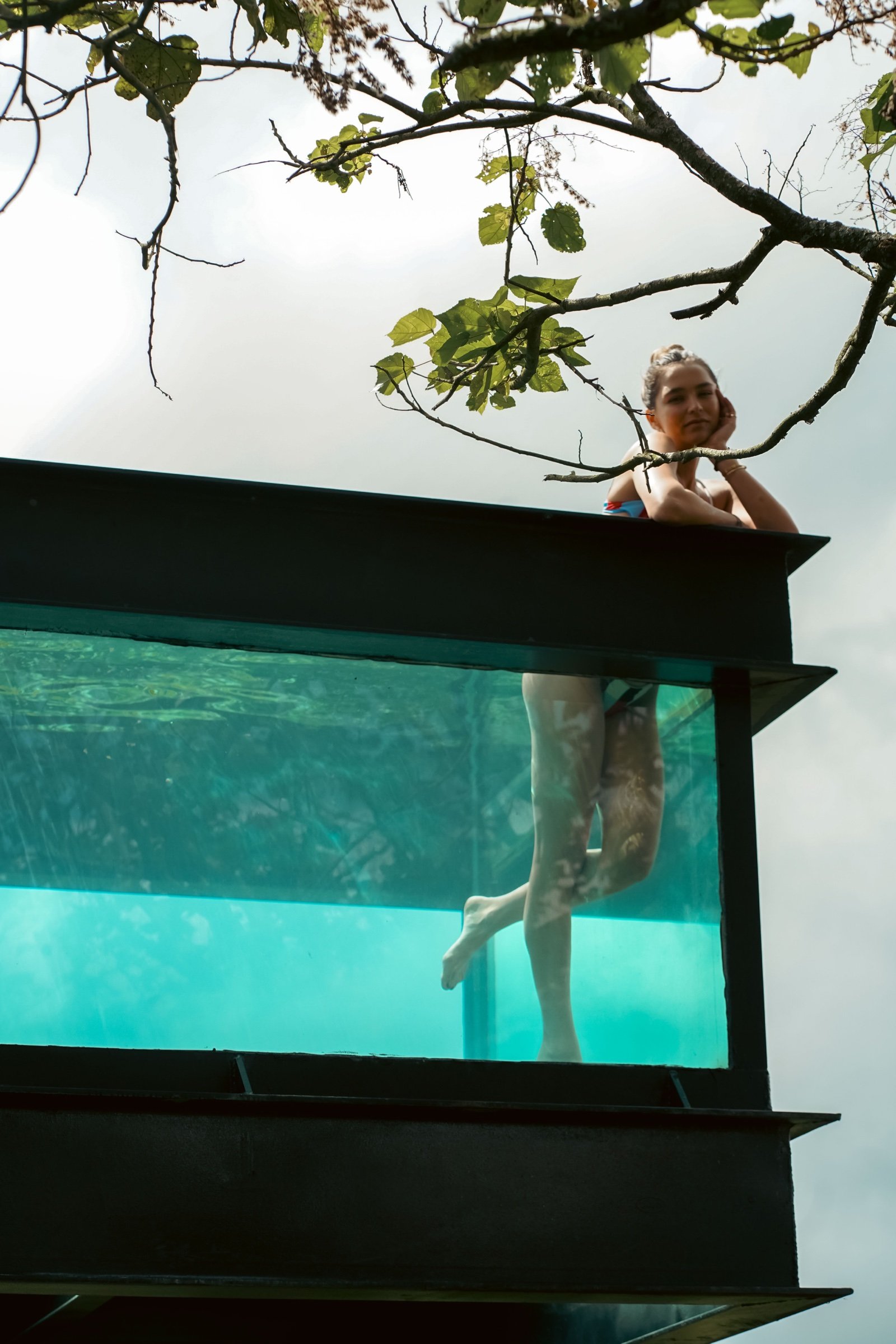
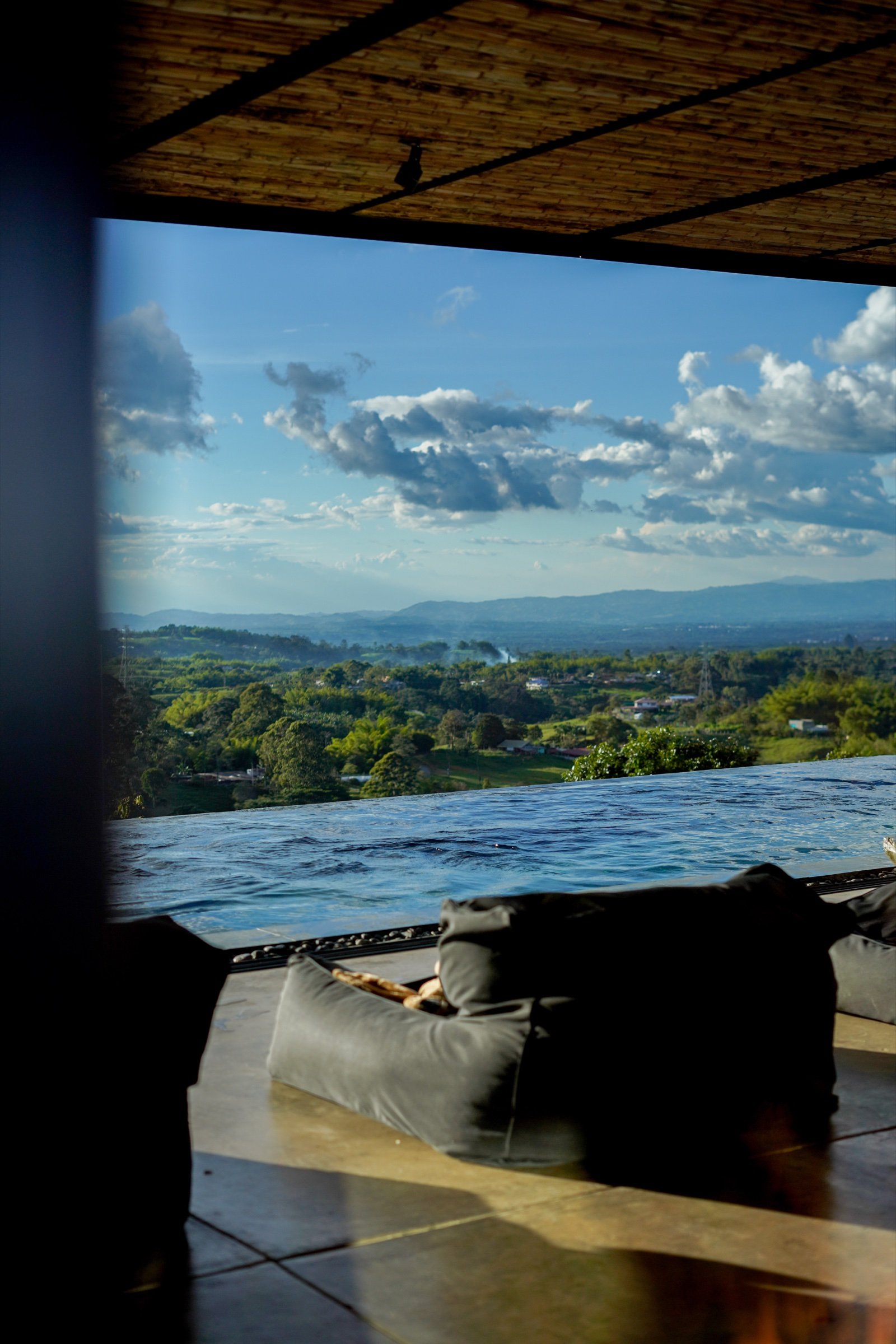
Glass in the tropics works when it is deliberate. A single pane that frames an Andean ridge, a pool that reflects the mountains, a corridor open to the canopy: these are compositions, not windows. The glass pool at Biohabitat is a good example, where water, sky and mountain line up into one quiet picture.
4. Honour natural materials
Timber, stone, bamboo, clay and living plants age beautifully in a humid climate when they are chosen and detailed with care. Their textures soften light and sound, and they connect a building to local craft. A good coffee-region project feels warm to the hand before it feels impressive to the eye.
5. Make room for art
Architecture and art share the same root: attention. Murals, sculpture, textiles and the work of local artists turn a structure into a place with a voice. At Biohabitat, the ExpresArte spirit brings contemporary creators into the story of the hotel, so that design is not frozen at opening day but keeps evolving.
What it feels like to stay inside this kind of design
Architecture is easy to admire in photographs and harder to judge until you spend a night in it. The tests are simple. Do you sleep with the sound of the forest? Does the light move through the space during the day? Do you want to linger on the terrace rather than reach for your phone? Do the materials feel good under your feet?
Our habitats are designed around those questions: private spaces that open toward the trees, with the mountains as the only neighbours that matter. We call them habitats, not simply places to sleep, because they are meant to be inhabited slowly.
Spaces that extend the architecture: spa, table and terrace
Design in the forest does not stop at the bedroom door. Three spaces carry the same philosophy:
- Bio Spa: treatments, thermal circuits and quiet rooms that use light, water and silence as materials. Read how it fits into a restorative trip in our wellness retreat guide to Colombia’s coffee region, and explore the Bio Spa itself.
- The table at Basto: a kitchen that treats the forest and the farm as its pantry, with the dining room open to the trees. Discover it in The Coffee Experience at Basto: From Bean to Cup and at Basto Resto Bar.
- The terraces: places to read, to do nothing, to watch the afternoon light cross the valley.
How to see architecture beyond the hotel
If design is why you travel, Quindío rewards a slow itinerary:
- Filandia: colourful balconies, carved doors and a lookout tower that frames the valley. Our guide to Filandia vs Salento explains how to pair the two towns.
- Salento: the classic bahareque and timber façades along Calle Real, best early in the morning before the crowds.
- Coffee farms: working fincas with traditional corridors, drying patios and bamboo structures that show how architecture and agriculture grew together.
- Cocora Valley: not architecture in the human sense, but wax palms that remind you why forms in this region feel so vertical and graceful.
For a broader plan, start with our Discover Quindío page, or if you are travelling as a couple, our curated honeymoon journey through the coffee region weaves design, nature and wellness into four days.
A simple checklist for choosing a design-led stay in the coffee region
- Does the building respond to its slope, trees and climate, or ignore them?
- Are natural materials used honestly and with craft?
- Is there real native vegetation, not only ornamental planting?
- Does art feel integrated, or like an afterthought?
- Do food, wellness and architecture tell one coherent story?
- Is there silence, and enough space to enjoy it?
Frequently asked questions
What is architecture inspired by the forest?
It is a design approach that follows the terrain, protects native vegetation, uses natural materials and opens spaces to light, air and views, so the building feels part of the landscape.
What is the best time to visit the coffee region for design lovers?
The dry months, roughly December to March and June to August, offer the clearest views, but the misty mornings of the wetter months give the forest its most atmospheric look.
Is Quindío suitable for a slow, design-focused trip?
Yes. Distances are short, towns are walkable and the pace invites staying in one place long enough to notice details.
Where design becomes a way of living
The best architecture does not ask for attention. It makes you quieter, slower and more observant. In the forest of Quindío, with terraces, glass, native trees, art and a table worth lingering at, that becomes easy. It is the idea behind Biohabitat Hotel: passion for architecture, inspiration from nature, love of art, good cuisine and the pursuit of wellbeing.
Antonella, destination ambassador for Quindío. A way of living.