
Most travelers plan a trip to Colombia’s coffee region around landscapes: wax palms, colonial plazas, green hills folded into one another. Fewer plan it around a table. That is a pity, because in Quindío the table is where the landscape finally explains itself. The fruit, the corn, the plantain, the herbs and the fire are all local, and the best kitchens know how to let them speak slowly.
This is a guide to what slow food actually means in this part of Colombia, and to the kitchen we know best: Basto, the restaurant at Biohabitat Hotel, led by executive chef María Clara.
What “slow food” means in Colombia’s coffee region
Slow food is not a menu category. It is an attitude: cook with the season, know where ingredients come from, give things time, and sit down to eat as if the meal were the point of the day. In the coffee region this attitude is almost native. Mornings start with coffee grown a few valleys away. Lunch can be a long, unhurried affair. Dinner is not rushed, because nobody is in a hurry to leave the table.
What is newer is a generation of chefs who treat that inheritance as a creative language rather than a nostalgic one. They keep the flavors of the family kitchen, then add technique, fermentation, fire and a global curiosity. The result is food that feels both deeply local and quietly modern.
Chef María Clara and the idea of honest cooking
María Clara, originally from Cali, describes her cooking as honest and conscious. The phrase is simple, and it is a good filter for the whole kitchen. Honest means the dish is what it says it is, without disguise. Conscious means that someone thought about where the ingredient came from, who grew it and what the plate asks of the land.
The kitchen’s positioning sums it up in five words: local roots, worldwide influence. A dish may start with a grandmother’s recipe and arrive at the table with a contemporary finish. Three ideas run through the menu:
- Sustainability: seasonal produce, local producers and the hotel’s own garden.
- Emotion: recipes that carry collective memory, the kind you recognize even if you have never tasted them before.
- Function: fermented foods, vegetables and good fats, cooking that leaves you feeling better after the meal, not heavier.
If you want the broader map of where to eat across the region, our farm-to-table guide to Quindío places Basto among the other tables worth your time.
Fire, bread and a table made for conversation
Certain elements keep returning when people describe eating at Basto: fire, music, wine, bread fresh from the oven, and a shared table designed for conversation. They are not decoration. They are a way of slowing a meal down.
Fire changes how a dish tastes and how a night feels. It gives the kitchen a rhythm of its own, and it gives guests something to look at while they wait. Bread of the day does the same job in a quieter way: it arrives warm, it gets passed around, and the meal starts as a shared gesture rather than an order. As for the table, long shared surfaces invite the kind of conversation that a corner two-top never will.
Signature desserts close the arc. They are the part of the meal where the kitchen is most playful, and the part guests tend to remember when they describe the evening afterwards.
Breakfast, the quietest way to meet the kitchen
If dinner is the performance, breakfast is the introduction. Basto serves breakfast every day from 7:00 to 10:00 a.m., and it is a good place to understand the kitchen’s sensibility without any ceremony. Toast arrives as a small composition, with a fried egg, serrano ham, melted cheese and a few microgreens, rather than a pile of food.
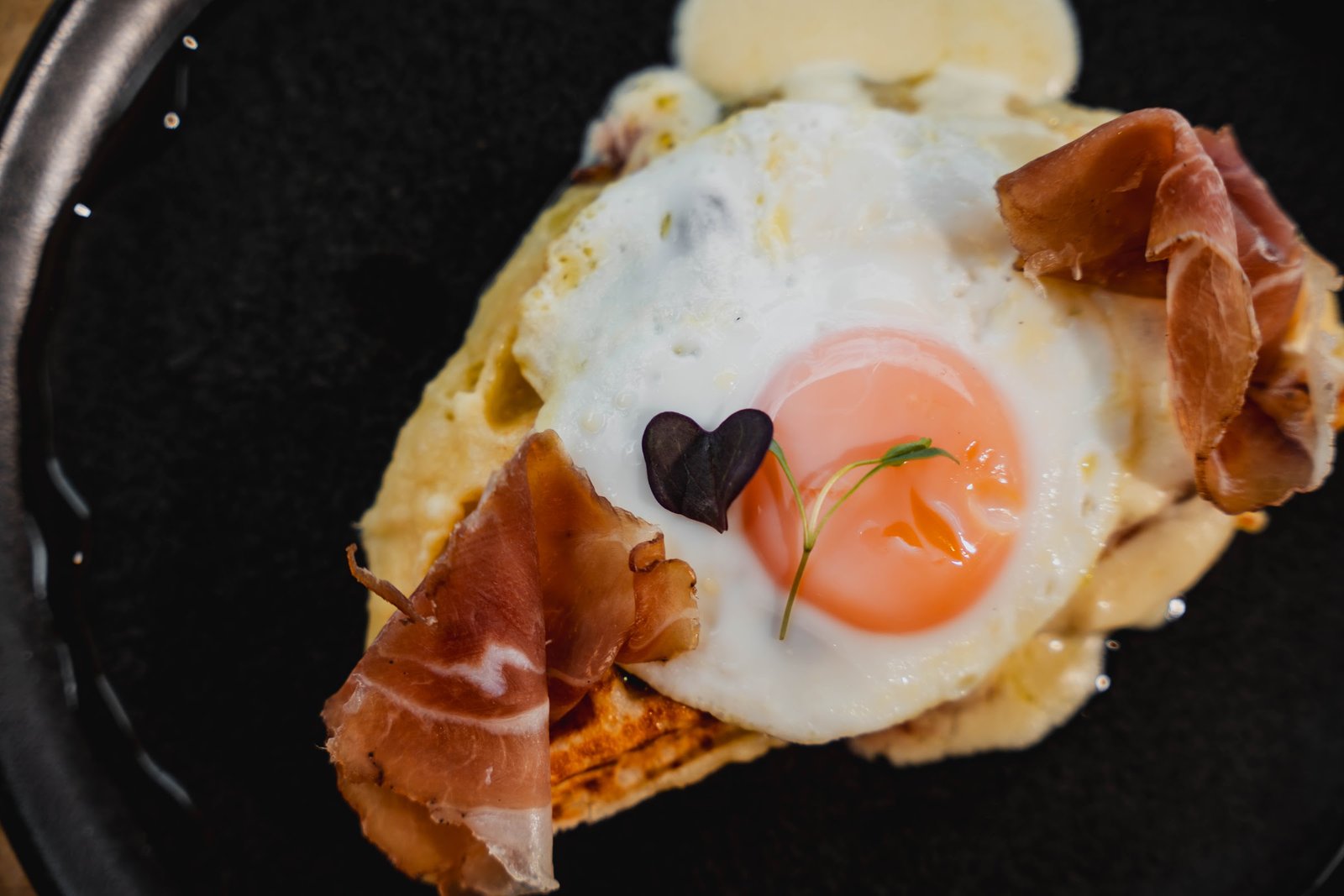
Pair it with a proper cup of Colombian coffee and you have the whole region in one sitting. If coffee is what brought you here, read The Coffee Experience at Basto: From Bean to Cup, and consider a curated coffee farm tour to see where the beans begin.
Not everything has to be precious
One of the quiet virtues of a good kitchen is that it can also do the easy thing well. Slow food is not solemn food. Sometimes the right order, after a day of walking in the hills, is something crisp, golden and meant to be shared.
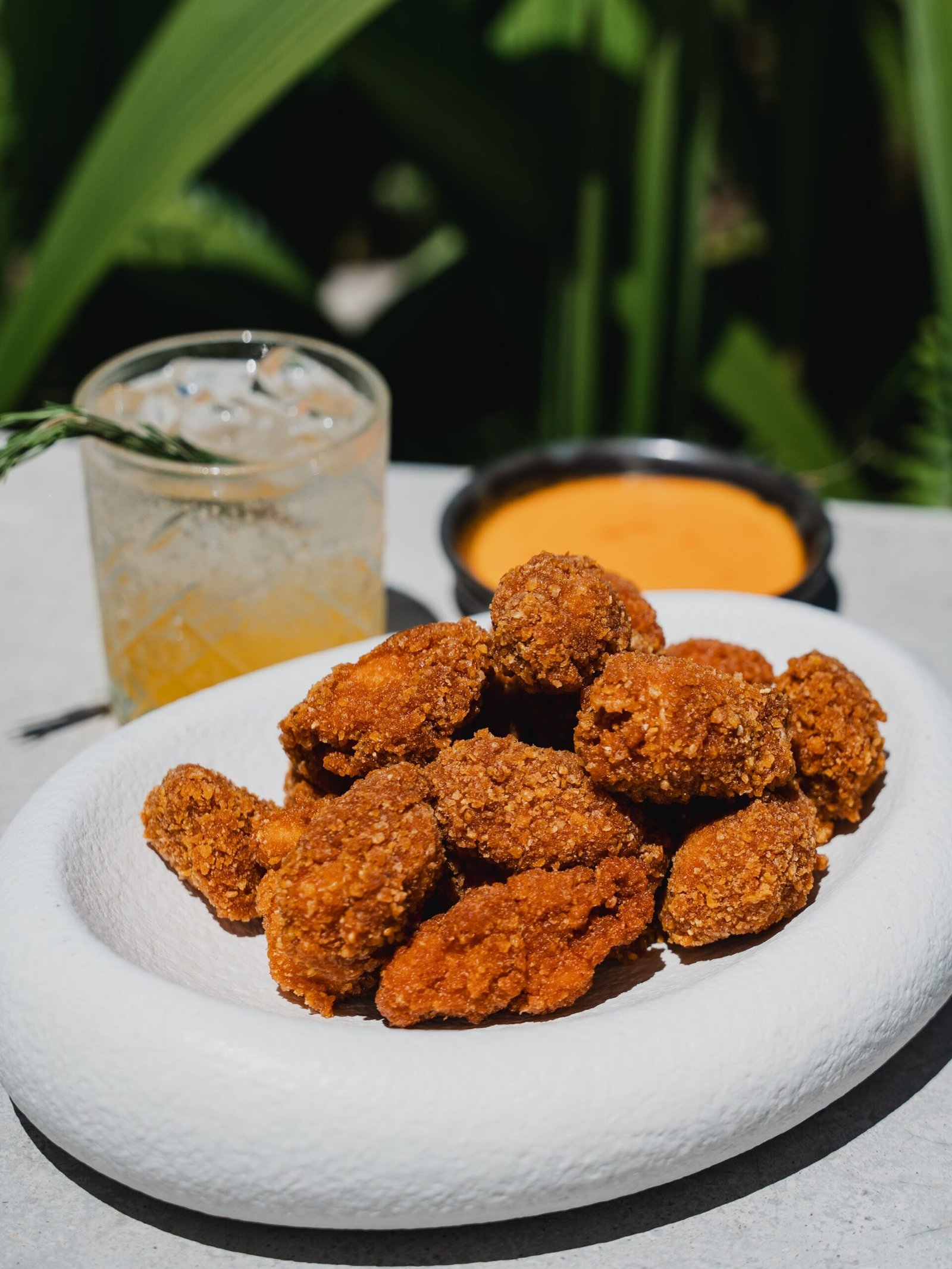
Crispy wings with a bright orange sauce and something cold to drink sit comfortably next to the more composed plates. That range is part of the charm: the same kitchen that cares about fermentation and seasonality is not afraid of pleasure.
Music, cocktails and the evening at Basto
Evenings at Basto have a soundtrack. Bio Sessions, the hotel’s own live DJ programming, runs on Wednesdays and Saturdays at 5:00 p.m. with Organic House, and on Fridays at 6:00 p.m. with Latin Sessions, alongside botanical cocktails. It is a programme for guests, a good reason to arrive at the restaurant a little before dinner and let the evening unfold.
For travelers who care about music as much as food, it is a welcome detail. The sound is part of the setting, not a replacement for conversation.
How to plan a food-first trip to Quindío
A few practical ideas if you want the table to be the center of your days:
- Build the day around one long meal. Choose a lunch or dinner you will not rush, and plan lighter activities around it.
- Eat breakfast slowly. It is the best-value moment to taste a kitchen’s style and to watch the morning light on the forest.
- Combine food with the landscape. A morning in a coffee town, an afternoon at the hotel, a long dinner. Our Discover Quindío page suggests how to pace it.
- Reserve ahead for dinner. The restaurant takes bookings through its own channel, so ask the hotel for the link when you plan your stay.
- Stay close to the table. Sleeping a short walk from dinner changes how you eat. Nobody drives home, so the evening can stretch.
Staying close to the kitchen
The simplest way to experience Basto is to stay at the hotel. Our habitats sit among the native forest, and each one is designed for two people, with a king bed and a view of the trees or the Andes. After dinner you walk back through the garden, and breakfast is waiting the next morning.
To understand how the whole property thinks, visit the Basto page for the restaurant’s story and booking details.
Why the table matters
A trip to Colombia’s coffee region can be a checklist, or it can be a feeling. The food is often what tips it toward the second. A table where the bread is warm, the fire is lit, the plate is honest and the conversation lasts longer than the dessert is, in the end, a pretty good definition of slowing down.
That is what chef María Clara cooks toward, and it is what we mean when we talk about architecture, nature, art, cuisine and wellness sharing one roof. Come hungry, and come without a schedule.
Biohabitat Hotel, Quindío, Colombia. A way of living.