
Ask ten travelers where to eat in Colombia’s coffee region and nine will name a coffee tour and a trout restaurant by the road to Cocora. Both are fine. But Quindío’s table is quieter, more seasonal and more interesting than that shortlist suggests. This guide is a curated way to think about eating here: what grows nearby, how a good meal is paced, and how to build a few days around the table instead of squeezing it between sights.
Why eating well in Quindío feels different
The region sits on volcanic soil between the Andes and the Cauca valley, with cool mornings, warm afternoons and rain that arrives on schedule. Plantain, yuca, cacao, citrus, avocado, tomatoes, fresh trout from the high rivers, and of course coffee all grow within an hour of each other. The best cooking here does not try to hide that proximity. It simply gets out of the way.
That is what we mean by farm-to-table in Colombia’s coffee region: not a slogan on a menu, but short distances, honest produce and a kitchen that cooks what the week gave it. If you want the coffee side of the story first, start with our guide to the coffee experience at Basto, from bean to cup.
The traditional table: what to try, and where it belongs
Before the refined versions, learn the originals. A country lunch in Quindío usually means a plate built around rice, beans, plantain, a grilled or braised protein and a bright tomato-and-onion sauce. Order it in a small town restaurant in Salento or Filandia, ideally somewhere with a view of a plaza and not a menu in six languages. Try fresh juices made with fruit you do not recognize (lulo, tomate de árbol, maracuyá), and ask for a hot chocolate served with cheese. Yes, cheese. It works.
For a walk through the towns themselves, our curated guide to Salento and Filandia and the piece on Filandia versus Salento will help you choose where to spend lunch.
Coffee is a meal, not just a drink
Do not leave coffee for the last ten minutes of a farm visit. A proper tasting, with the same bean brewed two or three ways, tells you more about the region than any menu. Choose a smaller farm where someone walks you through harvest, drying and roasting, then sits down and pours with you. We wrote about how to pick one in a curated coffee farm tour in Colombia’s coffee region.
A slow brunch as the anchor of the day
Brunch is where Quindío shows off. Think warm bread, avocado from the valley, eggs, tropical fruit cut at its peak, strong coffee and a table that nobody is in a hurry to leave. At Biohabitat, brunch is often paired with a wellness gathering: a morning of yoga or meditation in the garden, then a long table, then nothing in particular until the afternoon. That sequence, movement first and food after, is one of the quiet pleasures of the region.
If you are planning around it, the best brunch days are the ones with nothing scheduled afterward. Leave the afternoon open. The valley will still be there.
Dinner at Basto
When people ask where to eat in Colombia’s coffee region as a destination in itself, our answer is a short walk from the habitats. Basto Resto Bar is the hotel’s restaurant, led by chef María Clara, and it is built on the same idea as everything else here: local ingredients, careful technique, and a setting that does half the work. Cooking is warm and contemporary, rooted in Colombian produce rather than imported tricks.
Evenings at Basto have their own rhythm. On Wednesdays and Saturdays at 5:00 p.m. the Bio Sessions bring a live DJ set of organic house, and on Fridays at 6:00 p.m. the Latin Sessions take over. It is the rare dinner in the region where music, light and food are designed to arrive together, so plan to arrive early enough for a drink before you sit down.
Botanical cocktails and the end of the day
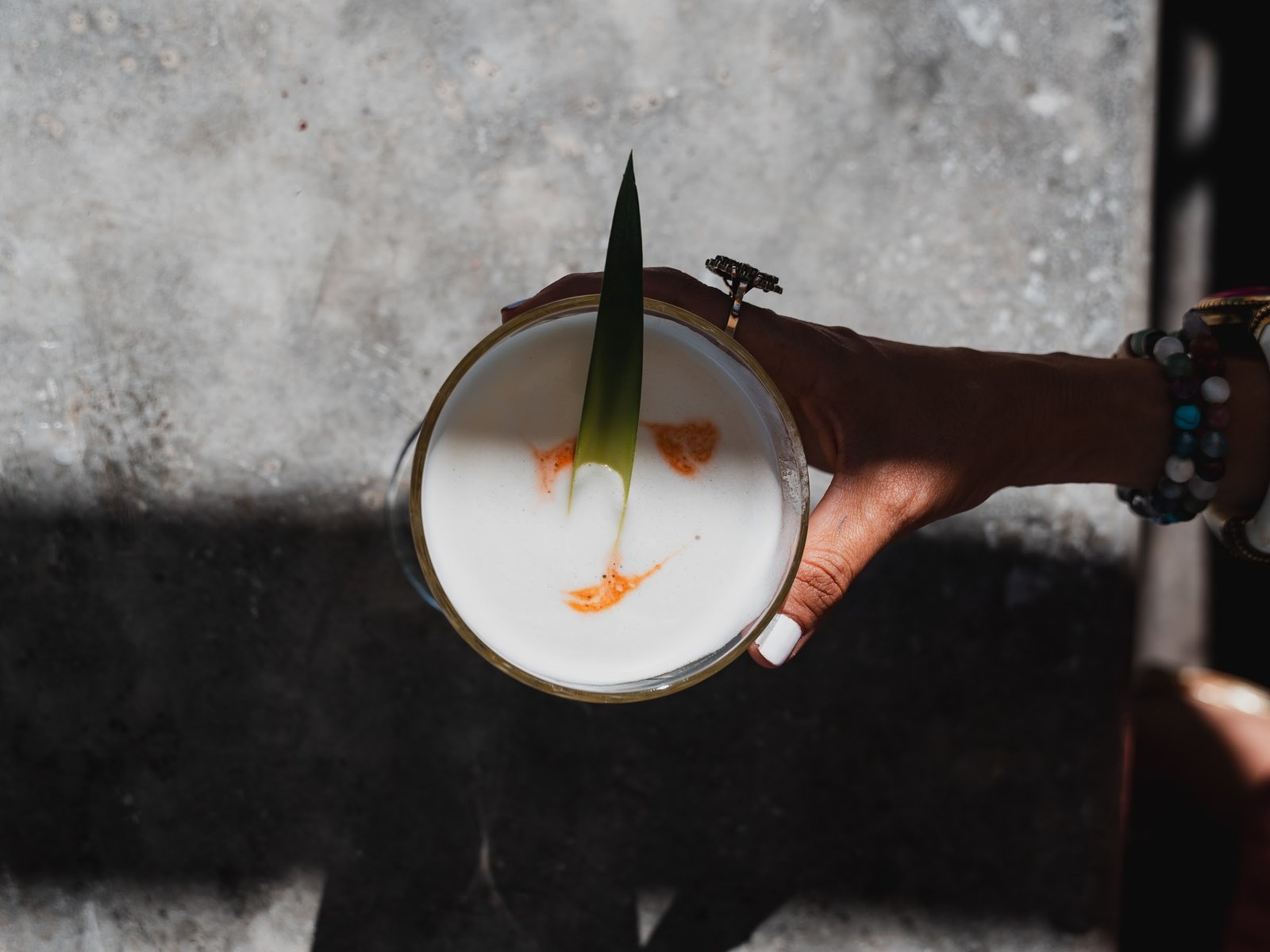
Basto’s bar leans botanical: herbs, leaves, flowers and fruit from the region shaping each glass. A creamy, citrus-touched cocktail with a fresh leaf on top says more about Quindío than a long description could. If you do not drink alcohol, ask for the infusions and non-alcoholic versions; the same ingredients carry the flavor beautifully.
A practical tip: have your first drink at golden hour, not after dinner. The light over the hills is the real ingredient.
Sunset, pools and the long evening
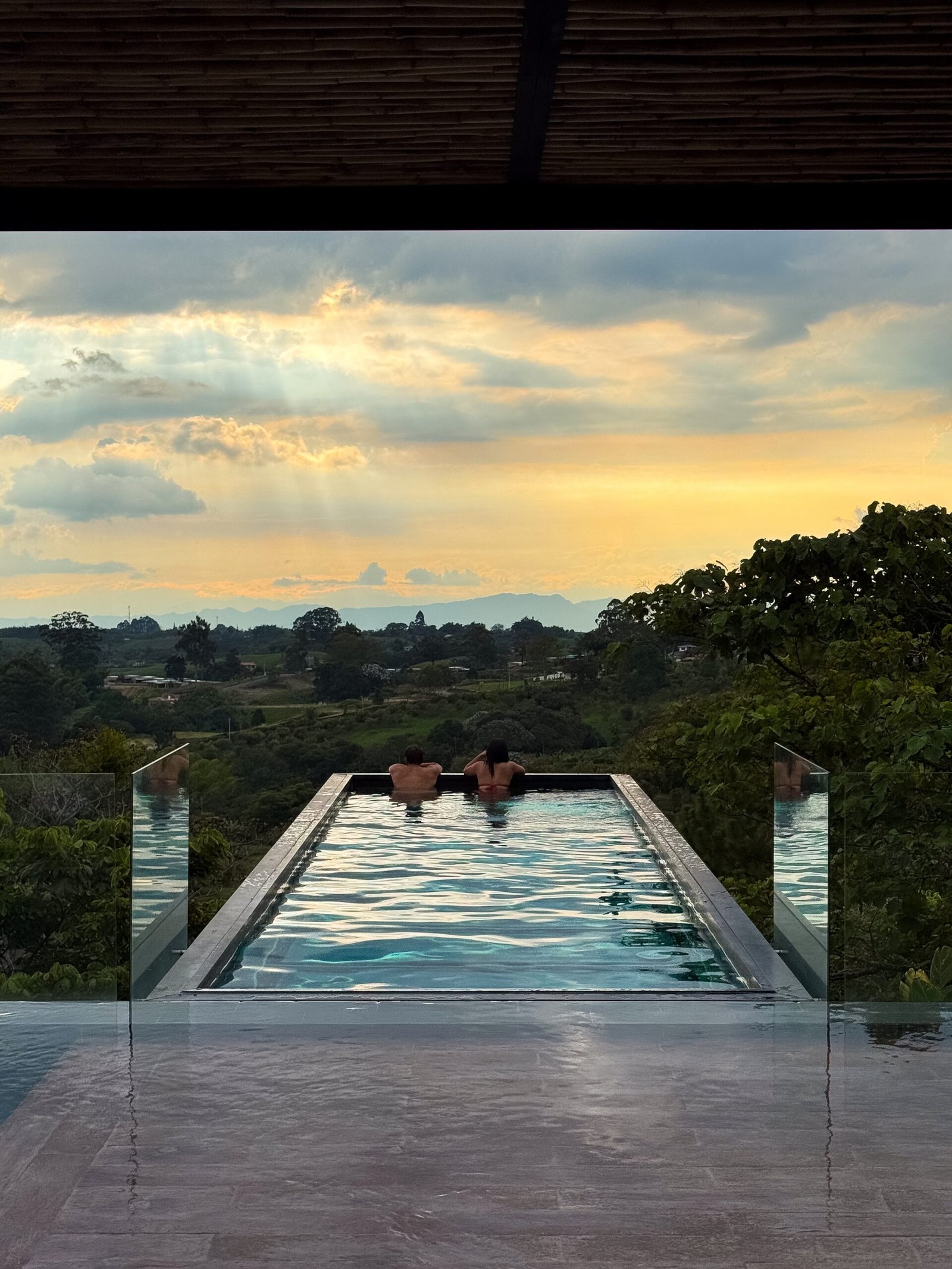
In this region, the best meals are bracketed by water and light. A swim in the infinity pool at golden hour, a short pause to dry off, then a table with a view: it is a simple order of events, and it works every time. The fact that you can do all of it without getting into a car is a luxury we think is underrated.
Staying close to the table
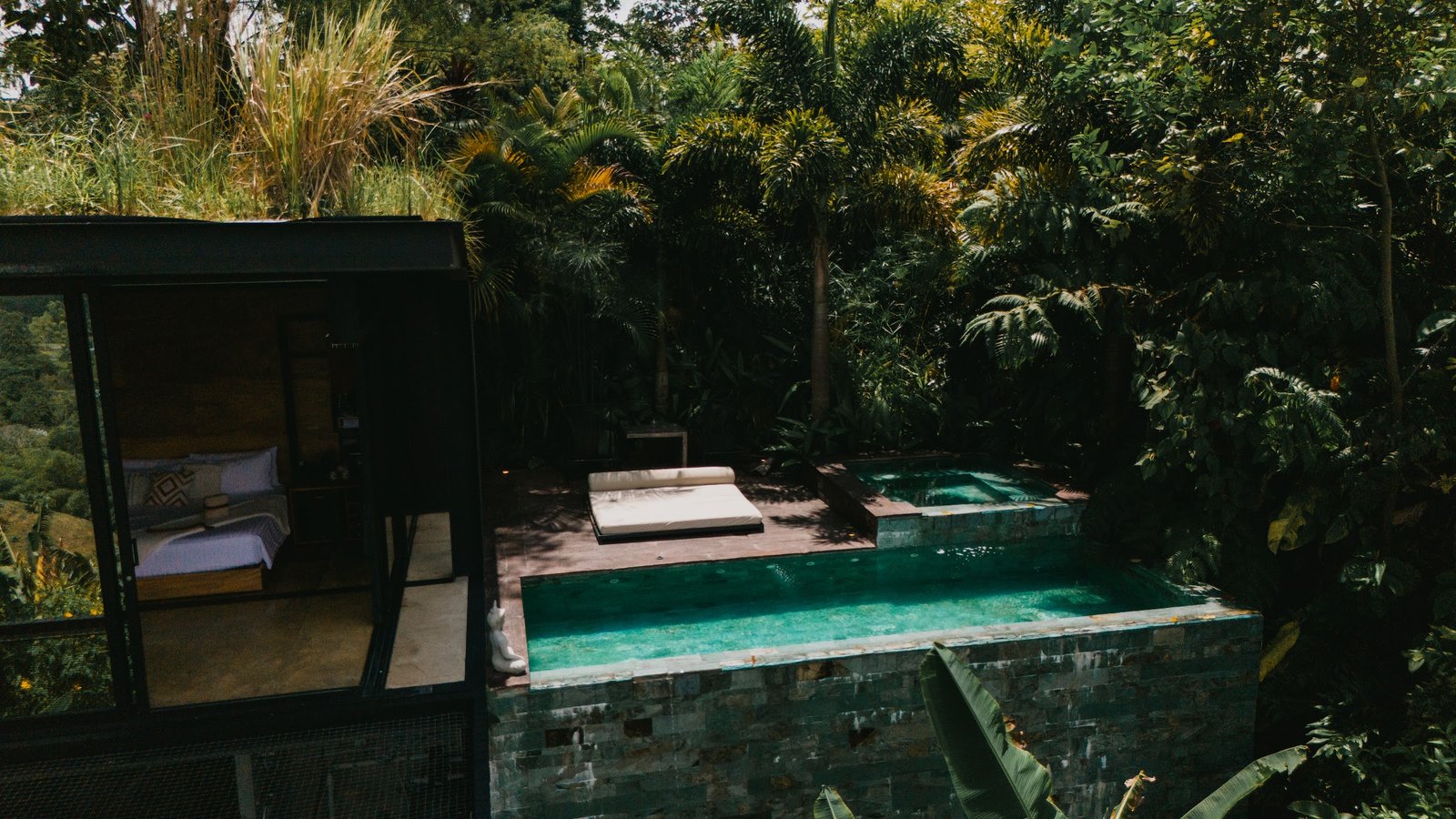
If food is the point of your trip, where you sleep matters more than it seems. Staying on the same property as the restaurant means no late drive on mountain roads, a second glass of wine without worry, and breakfast that begins with a short walk through the garden. Our habitats are designed for exactly that kind of unhurried stay, with forest views and terraces made for slow mornings. You can read more about the habitats and how to choose between them, or see our design-led take on where to stay in Colombia’s coffee region.
A simple three-day eating plan
- Day 1: Arrive, swim, golden-hour cocktail and dinner at Basto.
- Day 2: Morning yoga, long brunch, a small-farm coffee tasting in the afternoon, a traditional country lunch or early dinner in a coffee town if you feel like exploring.
- Day 3: Early walk in the native forest, slow breakfast, then a final spa session before you leave. See Bio Spa & Wellness for treatments.
Looking for more to do between meals? Our guide to discovering Quindío lists the experiences we recommend, from Cocora Valley to bird watching on the hotel’s own forest trail.
Frequently asked questions
When is the best time to eat out in Quindío?
Lunch is the main meal for locals, usually between noon and 2:00 p.m. Dinner is earlier than in Europe, so book a table for 7:00 p.m. rather than 9:00 p.m. See our month-by-month guide to the best time to visit the coffee region for seasonal notes.
Is the food in Colombia’s coffee region safe for sensitive travelers?
Yes, with normal common sense. Choose busy places, ask for bottled or filtered water, and let your hotel recommend where to go. Tell the restaurant about allergies or dietary preferences when you book.
Do I need a car?
Not for the best meals. Eating at your hotel is the simplest approach, and taxis or private transfers handle the rest.
The table as part of a way of living
The best advice we can give anyone asking where to eat in Colombia’s coffee region is this: eat slowly, eat near where food grows, and let the table, the light and the landscape belong to the same experience. Architecture, nature, art, cuisine and wellness are not separate chapters of a trip here. They are one. That is how we live at Biohabitat, and it is what we hope you take home.
Biohabitat Hotel, Quindío, Colombia. A way of living.