
Ask ten travelers about the best time to visit Colombia’s coffee region and you will get ten answers. The honest one is that Quindío is green, mild and welcoming all year. Because it sits close to the equator, its seasons are not hot and cold. They are drier and wetter, and each has its own mood. This guide helps you choose the one that matches the trip you want to take.
We write it from the native forest above Armenia, where the weather shapes our days: when we serve breakfast on the terrace, when the mist sits in the valley, and when the coffee is picked. Think of it as a curator’s calendar, not a weather report.
The short answer
- Driest, sunniest weeks: December to February, and again June to August.
- Greenest, quietest weeks: March to May and September to November.
- Coffee harvest atmosphere: the main harvest usually peaks in the last months of the year, with a smaller one in the middle of the year. Timing shifts by altitude and farm.
- Most balanced overall: late June to August, and January to early February.
Treat these as patterns, not promises. Mountain weather in the Andes changes by the hour, and a bright morning can turn into a soft afternoon rain. Pack for both and you will never be caught out.
How the seasons really work in Quindío
The coffee region sits at roughly 1,200 to 2,000 meters above sea level, which gives it a spring-like climate in every month. Days are warm, evenings are cool, and the vegetation never stops growing. The “dry” seasons still bring the occasional shower. The “wet” seasons usually bring rain in the afternoon, often leaving mornings clear.
That is useful to know. In the rainier months, plan your outdoor day early (a walk, a farm visit, a valley drive) and keep the afternoon for something slow: the spa, a long lunch, a book on a covered terrace.
Month by month
December to February: bright skies and festive energy
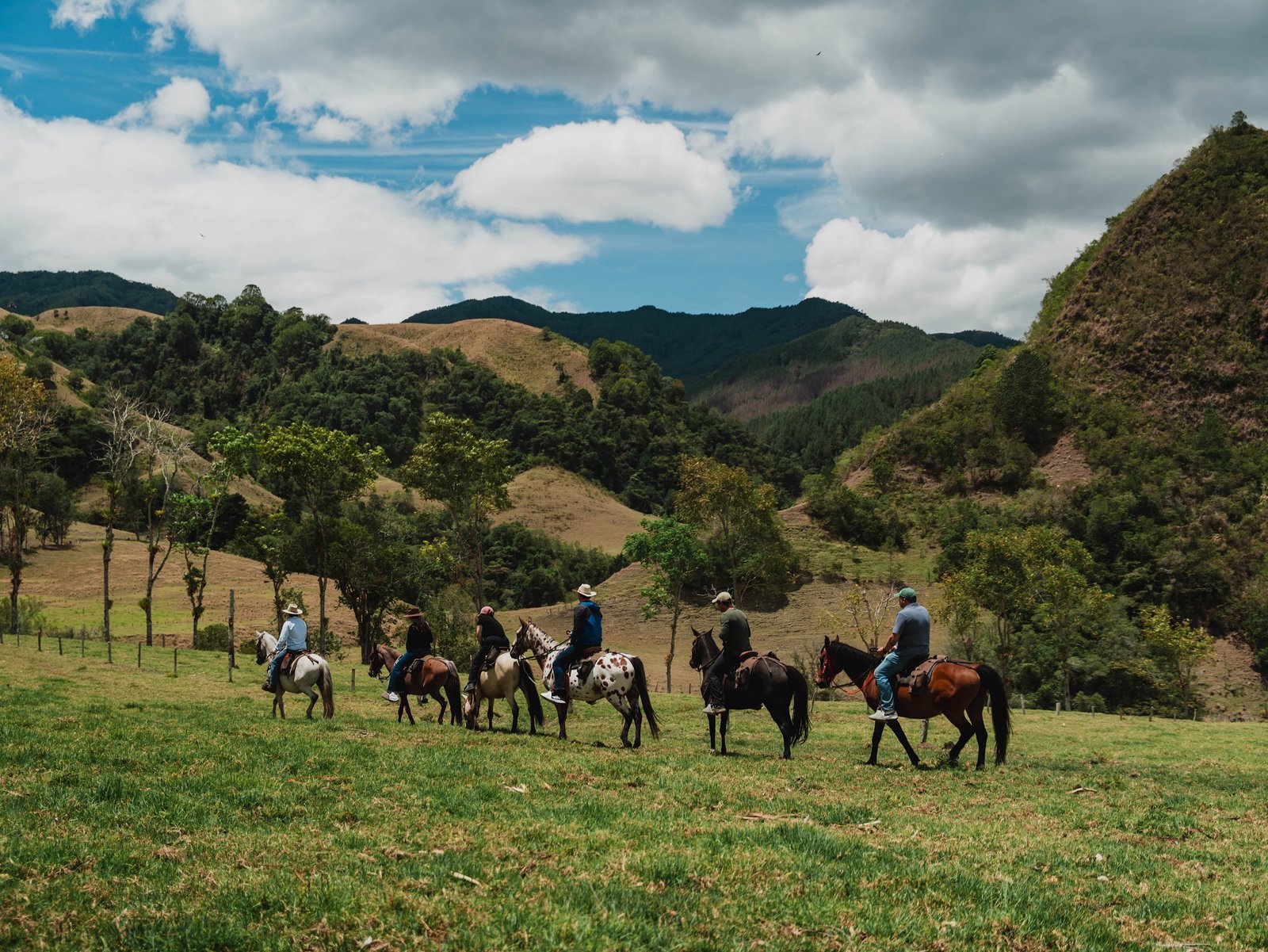
This is the classic high season. Skies are clearer, views of the valleys are long, and it is the easiest time for hiking and horseback. It is also when Colombians travel, so popular towns such as Salento and Filandia are busy on weekends and holidays. Book early, and plan your town visits on weekdays. If you want the clear weather without the crowd, aim for the second half of January.
March to May: lush, quiet and green
The rains arrive and the landscape turns an almost unreal green. Waterfalls run strong, the cloud forest feels alive, and the region is calm. It is a lovely time for travelers who like atmosphere over postcard skies. Bring a light rain jacket, schedule outdoor plans for the morning, and enjoy the quiet. It is also an excellent period for a wellness stay, because the weather invites you indoors and inward.
June to August: the sweet spot
Many seasoned visitors consider this the most balanced stretch. The weather dries out again, the mornings are crisp, and the mid-year coffee harvest adds life to the farms. International travelers also arrive in these months, so you will find a pleasant energy without the intensity of the December holidays. If you have flexibility, this is where we would point a first-time visitor.
September to November: soft light and the harvest
Rains return, but with them comes a gentler light and a quieter region. As the year closes, the main coffee harvest begins to build, which makes it a rewarding time for anyone curious about how coffee goes from branch to table. Expect the afternoons to turn gray more often than not, and treat them as an invitation to slow down.
Choose your season by the trip you want
For a honeymoon or romantic getaway
Dry months give you the most reliable terrace evenings and sunset views, but a rainy-season honeymoon has its own romance: mist over the canopy, a private bath, a candlelit dinner. We shaped a full itinerary in our guide to a honeymoon in Quindío.
For wellness and rest
Any month works. If you want a deep reset, the greener months are ideal, because the forest and the rain create a natural pause. Read more in our guide to a wellness retreat in Colombia’s coffee region, and explore the rituals at the Bio Spa.
For hiking, Cocora and the outdoors
Aim for the drier windows, December to February and June to August, when trails are firmer and views are clearer. Start early either way. Our notes on the Cocora Valley experience cover how to pace the day.
For towns, cafés and slow wandering
Visit Salento and Filandia on weekdays whenever you can, in any season. Weekends and national holidays bring crowds. Our curated guide to things to do in Salento and Filandia and the comparison of Filandia vs Salento will help you plan around the busy days.
For food and coffee lovers
Come in the last quarter of the year if you want to feel the harvest in the air. Then sit down at the table: our story of the coffee experience at Basto explains how the region’s coffee reaches the plate, and you can see the menu at Basto.
What to pack, whatever the month
- A light waterproof layer, even in the dry season.
- Comfortable shoes with grip for muddy trails and cobblestone towns.
- A warm layer for evenings and for higher altitudes such as Cocora.
- Sunscreen and a hat: the mountain sun is stronger than it feels.
- Swimwear, for the pool, the spa and thermal experiences.
Getting here and how long to stay
Most international travelers arrive through Bogotá or Medellín and continue to the region by domestic flight to Armenia, or by road. Allow at least four nights so the region has time to settle into you. Three of those days can be active, and at least one should be deliberately empty.
Where architecture and weather meet
One reason we love the rainy hours is how the building responds to them. Our terraces, glass and native trees were designed to let the forest in, so a gray afternoon becomes part of the experience rather than an interruption. That is the idea behind architecture inspired by the forest. Whether you stay in a private pool habitat or a quiet garden one, you will find the weather is a companion rather than a problem. You can browse our habitats to see which suits your season.
Frequently asked questions
What is the best month to visit Colombia’s coffee region?
If we had to choose one window, it would be late June to August, or January. They combine drier weather with a comfortable level of visitors.
Is the rainy season a bad time to visit?
No. Rain usually arrives in the afternoon, the landscape is at its greenest, and the region is quieter. Plan activities in the morning and keep the afternoon for the spa or a long meal.
When is the coffee harvest?
There is typically a main harvest toward the end of the year and a smaller one around mid-year, though timing varies by altitude and farm. Ask before you book a farm visit.
Is it crowded?
Mostly on weekends, national holidays and the December season. Midweek visits are calmer in any month.
Plan your visit with intention
There is no wrong season in Quindío, only a different story each time. Choose the light you want to wake up to, then let the rest unfold slowly. For help matching a month to a trip, start with our guide to discovering Quindío.
Curated with love for this land, from the forest above Armenia. A way of living.