
Most itineraries in Colombia’s coffee region are built around looking: at wax palms, at colorful town squares, at farms. Fewer are built around making. Yet some of the most memorable hours of a slow trip happen when you put a brush in your hand with no talent required and no result expected. If you are searching for art workshops in Colombia’s coffee region, this guide is about what that can look like when art is part of how a hotel lives, not a decoration on its walls.
Why art belongs in a coffee region trip
Quindío is a landscape that practically asks to be painted: layered green hills, cloud that drops and lifts within an hour, light that turns gold before five. Travelers from the United States and Europe often tell us the same thing afterwards: they arrived with a list of places to see and left remembering the quiet hours. Art is one of the simplest ways to turn quiet into something you can hold.
There is also a practical reason. A coffee region itinerary can easily become a sequence of tours. A workshop slows the rhythm. It gives a morning a shape without asking you to get in a vehicle.
ExpresArte: art and ceramics inside the stay
At Biohabitat Hotel, the creative program is called ExpresArte. It is part of the weekly agenda rather than a separate paid excursion, and it follows a simple structure:
- Art sessions: Tuesdays at 10:30 a.m. and Saturdays at 5:00 p.m.
- Ceramics: Thursdays, every two weeks.
- Materials are included, and places are limited, so it is worth asking at check-in.
The photograph at the top of this article shows the kind of table we mean: watercolor palettes, brushes of different sizes, water jars and paper with color samples. It is a working table, not a staged one. You do not need to know how to paint. Watercolor is forgiving in the best way: it rewards looking more than skill.
What to bring, and what to leave behind
Bring curiosity and comfortable clothes you do not mind marking with pigment. Leave behind the idea that you need to produce a good picture. The point of a morning like this is attention. Most people find that after twenty minutes of mixing green, they start seeing the forest outside differently: not “green,” but a dozen greens.
Ceramics: the slow craft
Ceramics is the other half of the program, and it suits the pace of the region. Clay asks you to go slowly, to press, to wait, to accept an imperfect shape. It is an unusual souvenir too: an object that carries a specific afternoon in Quindío rather than a shop logo. Because the ceramics session runs every two weeks, check the calendar when you plan your dates if it matters to you.
Design as the quiet backdrop
An art-filled design hotel does not mean walls crowded with canvases. At Biohabitat it means a place where the building itself is considered. Habitats of steel and glass sit among native trees, and interiors keep their materials honest: natural stone, wood, warm light. If you want to understand the logic behind the buildings, read our piece on architecture inspired by the forest, and our design-led guide to where to stay in Colombia’s coffee region.
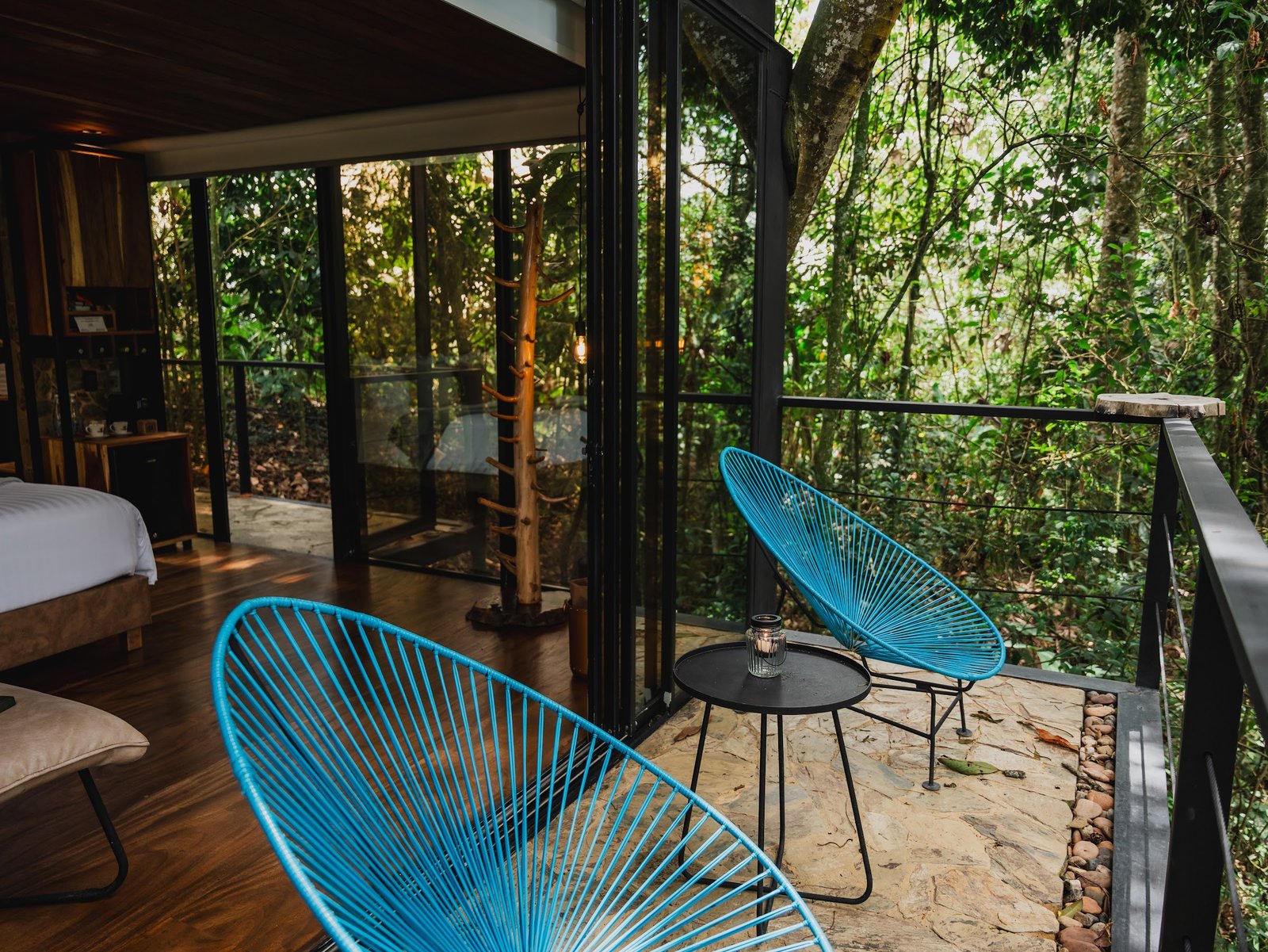
A terrace like this one is where a sketchbook comes out naturally. Large glass walls, dark wood floor, two chairs and a forest to draw: the architecture does half the inspiration for you. Our habitats were designed so that the landscape is always part of the room.
A day built around making things
Here is how a creative day can unfold without rushing anything:
- Morning: a slow breakfast, then an ExpresArte session on a Tuesday or Saturday, depending on your dates.
- Midday: a walk on the hotel’s native forest trail, notebook in hand. Birdwatching, for those who like it, runs on Friday mornings with a local guide.
- Afternoon: time at the Bio Spa & Wellness. After hours of concentration, the body appreciates a ritual. If you want to see how a full spa day unfolds, read about a day of slow rituals at Bio Spa.
- Evening: dinner and a drink at Basto. On certain evenings the hotel’s Bio Sessions bring live DJ sets to Basto, which keeps the creative thread going into the night.
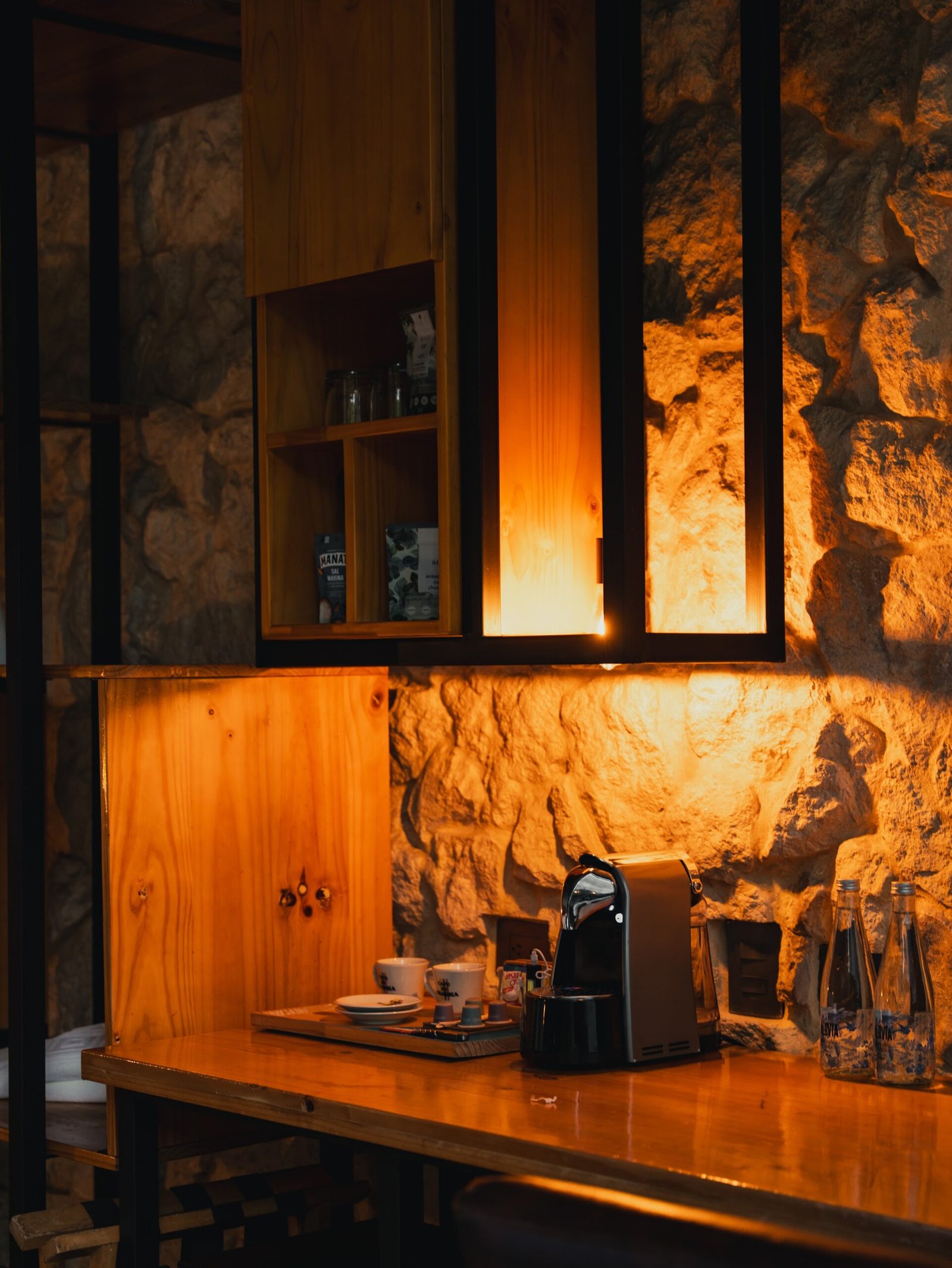
Back in the habitat, a coffee corner next to a natural stone wall is the kind of detail that makes a creative day feel complete: a quiet cup while the paint dries, or while you flip through the sketches you made that morning. For the coffee itself, our guide to choosing a curated coffee farm tour will help you pick a good one.
How to combine workshops with the rest of Quindío
The best itineraries alternate effort and rest. A morning workshop pairs well with a half-day outside: the quieter streets of Filandia, or the wax palms of Cocora. See our Filandia vs Salento comparison and the Cocora Valley hike guide to plan those days, and the Discover Quindío page for the wider region.
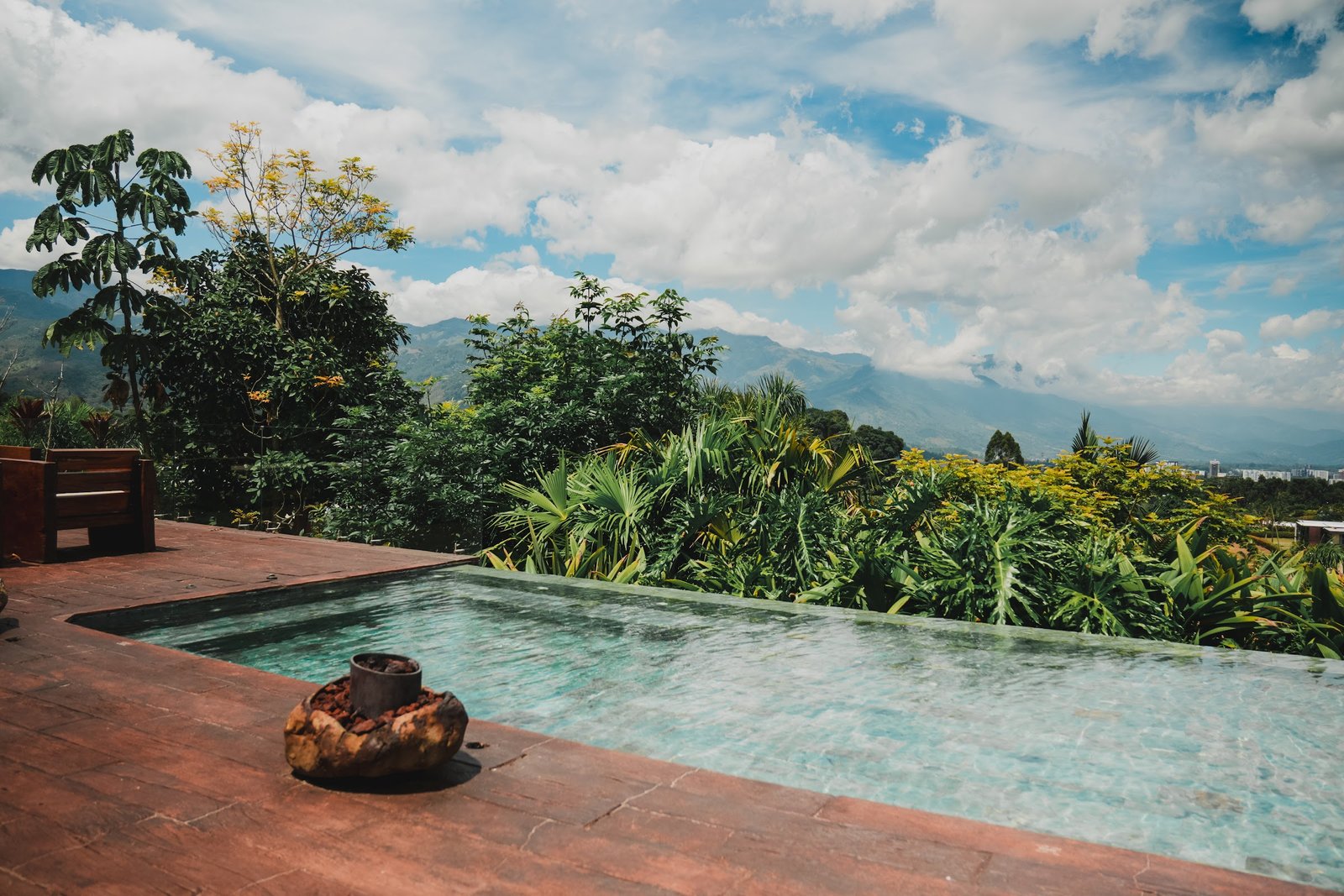
And when the day of making is done, the infinity pool on its red wooden deck, with mountains behind it, is a good place to do nothing at all.
Practical notes
- The ExpresArte schedule can change, so confirm the day and time at check-in.
- Places are limited. Ask early if a session matters to your trip.
- No experience is needed. Materials are included.
- Pair art mornings with outdoor afternoons for the best balance.
Who this suits
Couples who want something to do together that is not a restaurant. Solo travelers who want a gentle way to meet the place. Friends traveling together who like to make things. And anyone who suspects that the best souvenir from a trip is an hour of full attention. If you are planning a romantic stay, our Colombia honeymoon guide shows where a workshop fits.
Final thought
Art workshops in Colombia’s coffee region do not need a studio in a city. They can happen on a table beside the forest, with a brush, some water and no pressure. That is what we mean when we talk about a place that combines architecture, nature, art, cuisine and wellness: the creative hours are not an add-on, they are part of the rhythm.
Biohabitat Hotel. A way of living.