
There is a particular kind of traveler who arrives somewhere and looks first at the light. If that is you, this guide is written for you: a slow look at what makes a photogenic hotel in Colombia’s coffee region, and how to travel through Quindío with a camera in your hand and, more importantly, your phone in your pocket for most of the day.
I am Antonella, and I write about Quindío as someone who has chosen to live its rhythm. After many mornings spent watching the valley change color, I can tell you the best photographs here are rarely planned. They happen when a place is designed well enough that beauty simply shows up.
What makes a hotel photogenic (it is not the filter)
A place photographs well when four things are true at once: honest materials, a clear relationship with the landscape, good natural light, and enough quiet that you actually notice all of it. Glossy lobbies rarely pass that test. Buildings that were drawn in conversation with their site almost always do.
That is why, in a region famous for green hills and wax palms, the strongest images tend to come from places where architecture and forest share the frame. If you want the longer reading on this, my piece on architecture inspired by the forest explains how terraces, glass and native trees shape a stay.
The elevated glass pool: Biohabitat’s most recognizable frame
At Biohabitat Hotel, the image guests photograph most is the elevated glass pool: turquoise water held in glass, carried on a black steel structure, with tree branches and sky moving behind it. Seen from below, it feels almost like a piece of installation art placed gently inside the forest.
A few small suggestions if you want to capture it well:
- Walk the stone path first. A path of round stones crosses a mirror of water beneath the structure. Approaching it on foot gives you the composition before you raise a lens.
- Come back at different hours. Early light is soft and green. Late afternoon turns the glass warm. The same frame becomes three different photographs.
- Include a person. Scale is what makes the structure legible. A guest standing in the water, or leaning on the railing, tells the whole story.
Light in the coffee region: a quick field guide
Quindío sits in the Andes, so the weather moves quickly and generously. Mornings are usually clear and crisp, with a clean light over the valley. Afternoons bring clouds that build and break, and some of the most dramatic skies of the day appear around sunset. If you are choosing when to travel for photography, my month-by-month guide to the best time to visit Colombia’s coffee region will help you match the season with the mood you want.
A practical rhythm that works well:
- Sunrise to 9 a.m.: forest edges, terraced gardens and breakfast tables in soft light.
- Midday: shade, interiors and details such as stone walls, wood grain and ceramics.
- Golden hour: the infinity pool, the valley views and the long shadows on the decks.
- Blue hour: candlelight, fire and the first lights coming on across the hills.
Water as a design material
One thing I love about this place is how many forms water takes. There is the elevated glass pool, the infinity edge that disappears into the valley, and the quiet mirror pools that reflect plants and clouds. Water is used the way a good architect uses it: to double the sky, to cool a terrace, to slow you down.
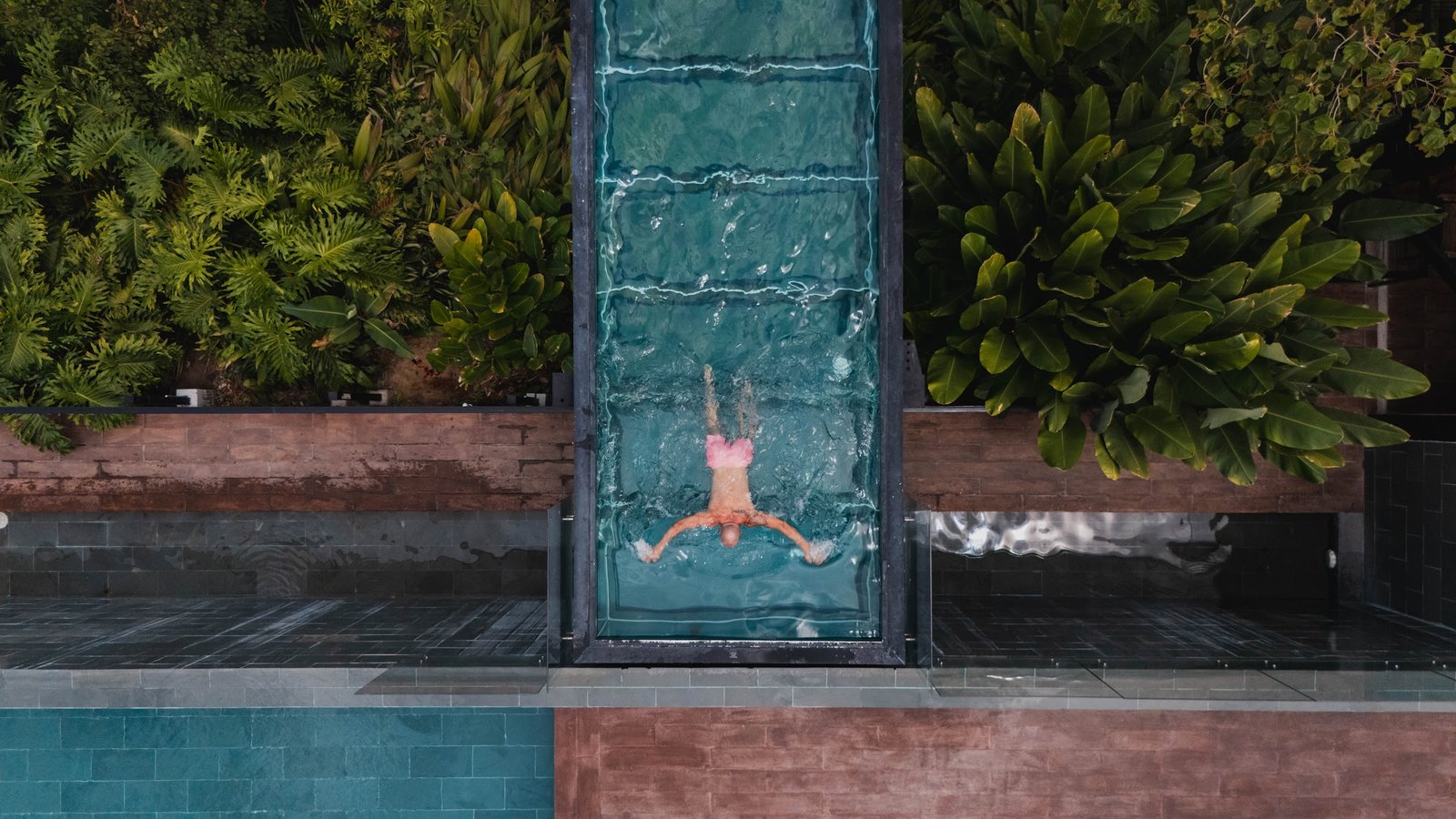
From above, the effect becomes graphic. A swimmer crossing the turquoise surface between planters and a wooden deck becomes a clean, symmetrical composition, the kind of image that needs no caption.
Beyond the pool: materials worth photographing
The pool is the headline, but the details are where a stay becomes memorable. In the habitats, look for natural stone behind the bed, warm wood, floor-to-ceiling glass that frames the forest, and bathrooms with views of the vegetation. These are not decorative accents. They are the reason the interiors feel calm. If you are choosing where to sleep, you may find my design-led guide to where to stay in Colombia’s coffee region useful, and you can explore the habitats directly.
Outside, the hotel’s terraced gardens, stone paths and palm-lined lawns give you endless quiet compositions: a path disappearing into ferns, a deck wet after rain, light moving through leaves.
Food is part of the picture
Some of the most beautiful frames of the trip happen at the table. Breakfast under open sky, botanical cocktails, a plate built around local ingredients: at Basto, chef María Clara’s kitchen is designed to be tasted first and photographed second. My guide to where to eat in Colombia’s coffee region covers the wider farm-to-table scene in Quindío if you want to plan your meals around it.
A gentle rule for the traveler with a camera
Here is the advice I give friends: take your photographs in the first twenty minutes, then put the phone away. A place like this works on you slowly. The pool, the spa, the walk through the native forest and the long dinner are the experience. The photographs are only the souvenir.
That is also the philosophy behind a growing number of guests who come to unplug. If that sounds like you, read about a digital detox retreat in Colombia’s coffee region, which treats the camera as optional.
Planning your visit
- Stay at least two nights. One day for the photographs you came for, another for the ones you did not expect.
- Pair the hotel with the destination. Cocora Valley, Salento and Filandia are all within easy reach. See the Discover Quindío page for ideas.
- Add the spa. Few things soften a traveler’s face for the camera like an afternoon at Bio Spa & Wellness.
- Bring a light layer. Evenings cool down quickly, and some of the best light arrives with the cloud.
Frequently asked questions
What is the most photogenic hotel in Colombia’s coffee region?
It depends on what you love to look at. If you are drawn to contemporary architecture in dialogue with native forest, Biohabitat Hotel’s elevated glass pool, infinity-edge views and stone-and-wood habitats are among the most distinctive in Quindío.
When is the best light for photography in Quindío?
Early mornings for clarity and soft green tones, and the hour before sunset for warm, cloud-filled skies over the valley.
Do I need a professional camera?
No. A phone is enough, especially when the setting does most of the work.
The photograph you will remember
When guests leave, they rarely mention the picture they took of the pool. They talk about the morning they sat on a terrace with a coffee and watched the mist lift from the valley, and did not reach for anything at all. Design that makes room for that moment is the highest form of photogenic.
Architecture, nature, art, cuisine and wellness, all in the same frame: a way of living.