
Birdwatching in Colombia’s coffee region begins before the coffee does. At seven in the morning, when the first light crosses the mist and the forest is still deciding what kind of day it will be, the valley sounds like an orchestra tuning up. You don’t need to be an ornithologist to love it. You only need to be willing to arrive early, walk slowly and listen.
Colombia holds more bird species than any other country on Earth, and Quindío, a small department folded into the Andes, is one of the easiest places to feel why. Here is how to approach birdwatching in the coffee region as a guest rather than a checklist-chaser, and how to build a day around it that keeps its calm.
Why the coffee region is a birdwatching destination
Altitude is the secret. In a few kilometers the landscape climbs from warm valleys through coffee-growing hills to cloud forest, and each band of altitude brings its own residents. Hummingbirds work the flowers near the terraces, tanagers move through the canopy in loose, colorful parties, and in the highest reaches the cloud forest shelters species you will not see anywhere else on the trip.
That variety is also why the coffee region rewards slow travel. A rushed itinerary sees the postcard. A slow one sees a forest that is alive from the first light, and a lot of that life is feathered.
A native forest you can walk before breakfast
At Biohabitat Hotel, birdwatching is not an excursion you board a vehicle for. The forest is part of the property. A guided walk leaves on Friday mornings at 7:00 a.m., follows a 2.5 km interpretive trail and lasts about two hours, with a local guide, binoculars and a pace that suits beginners. The difficulty is low: this is a forest walk, not a climb.
The hotel’s own forest has well over a hundred and fifty characterized bird species, and the team keeps learning more. A guide who knows the trail by ear is the real luxury here. Most of what you find in a tropical forest you hear first, and a guide turns a wall of sound into names, habits and small stories.
This is the same forest that shapes the architecture. If you want to understand how glass, wood and terraces were arranged around the trees rather than in place of them, read our piece on architecture inspired by the forest, and on how the property earns the word sustainable, the guide to an eco hotel in Quindío.
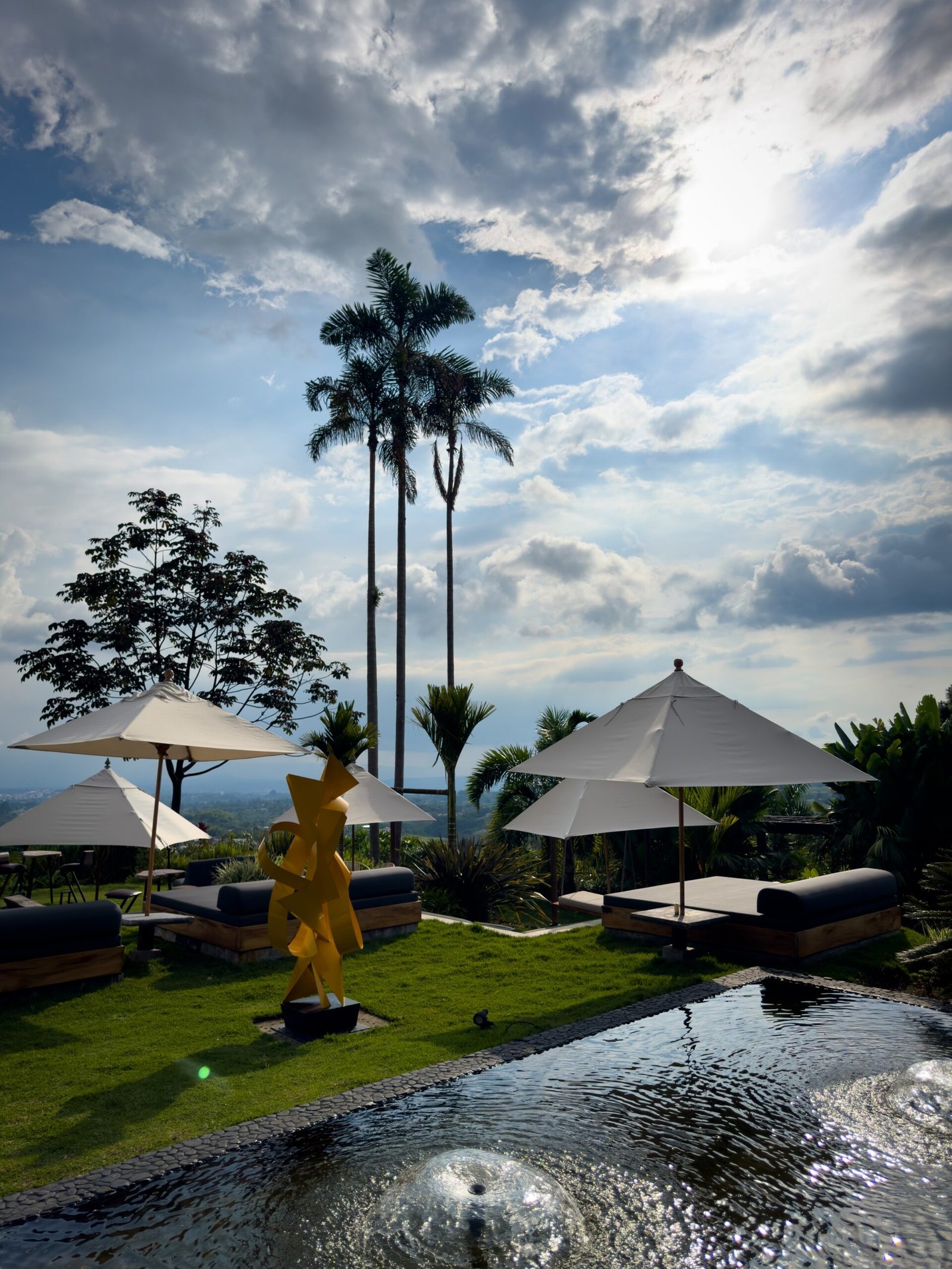
How a dawn walk unfolds
Expect to meet the group quietly, with a hot drink if you want one, and to head into the trees as the light turns from grey to gold. The first twenty minutes are about arriving: your ears adjust, your voice drops, your phone goes into a pocket. Then the guide stops, lifts a hand, and the forest starts to come into focus.
- Listen first. Birds are far easier to find by sound than by sight. Let the guide point you toward a call before you raise the binoculars.
- Move slowly and stop often. The best sightings happen in the pauses.
- Wear neutral colors. Olive, brown and grey are better than bright whites and reds. Closed shoes with grip help on damp ground.
- Bring a light layer. Mornings in the hills are cool even in warm months.
- Keep expectations generous. Some mornings give you a dozen species, others give you one unforgettable one. Both count.
The other trails: Bio Sendero and the night walk
Dawn is only one way into the forest. The Bio Sendero, a 1.4 km path taking about an hour, explains how the hotel runs: solar energy, wetland water treatment, permaculture and the planting of native trees. It is open between 8:00 a.m. and 3:00 p.m., and it is a gentle way to understand the place you are sleeping in.
After dark, a night walk of 2.5 km leaves at 7:00 p.m. with a guide, looking for amphibians, nocturnal mammals and insects that only appear when the light goes. It has medium difficulty and a completely different mood: torchlight, damp air and a forest that sounds like a different building.
When to go
The coffee region can be visited all year, and birds don’t keep a calendar the way tourists do. Drier months make trails easier underfoot, and the green seasons bring flowers and fruit that draw the birds in. If you are choosing dates for the whole trip, our month-by-month guide to the best time to visit Colombia’s coffee region will help. Because the guided walk is on Fridays, plan your stay so that morning falls inside it, and reserve ahead, since the walk is guided and small by design.
Pairing birdwatching with the rest of Quindío
The best itineraries alternate effort and rest. A dawn walk, a slow brunch, a few hours at the spa, an afternoon in a coffee town. If you want a bigger landscape, the wax palms and cloud forest of Cocora Valley are an hour or so away, and our Cocora Valley experience explains how to see them without losing the day to crowds. For more on towns, markets and farms, start with Discover Quindío. Hikers who want a high-altitude day with cloud forest birds can arrange longer outings through the hotel, from a demanding mountain walk to a day by 4×4 to the high forest, home of the endangered yellow-eared parrot.
Afterwards, rest properly. Our post on a digital detox retreat in Colombia describes how a day built around forest, spa and slow meals keeps the calm you found at sunrise.
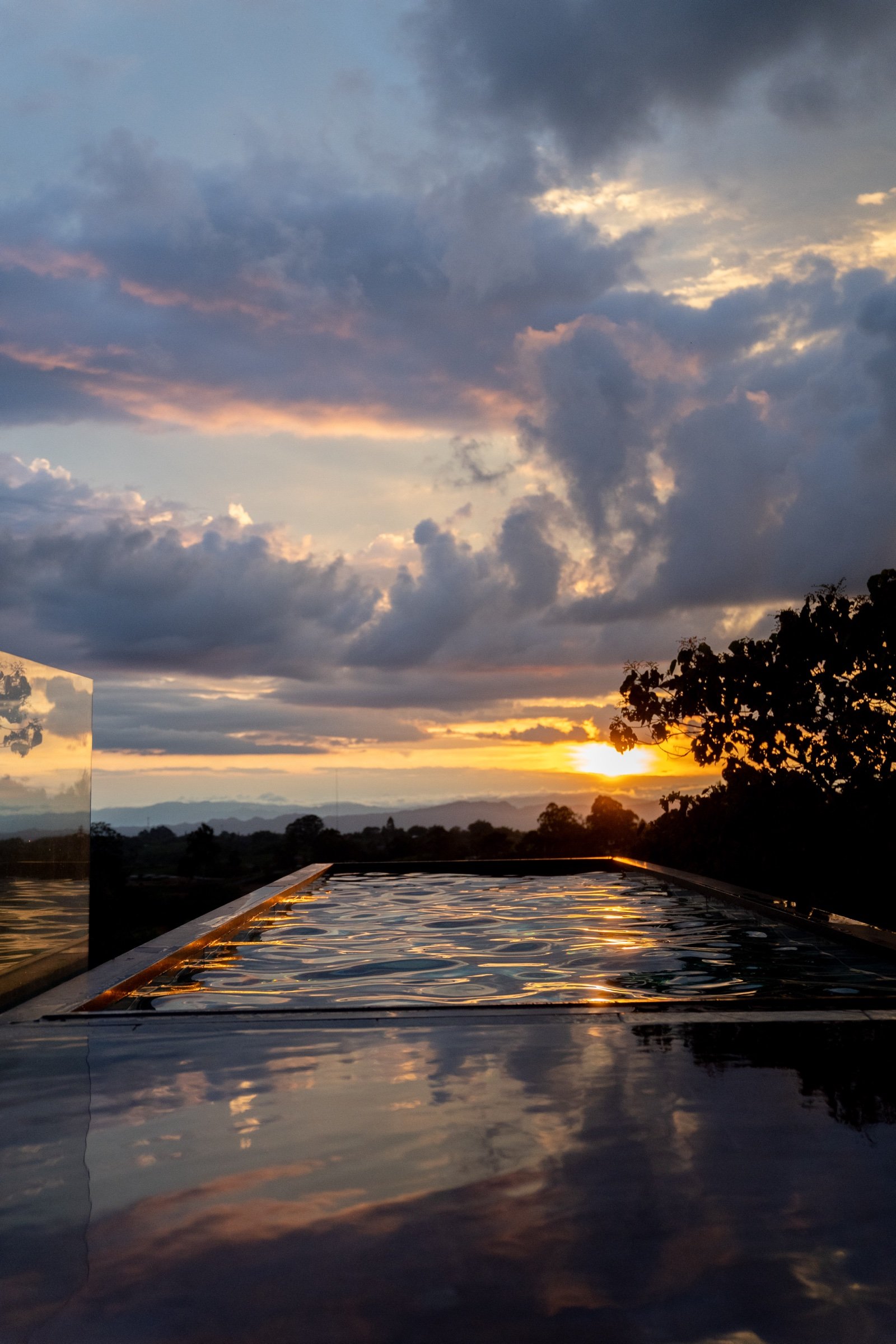
Where to rest after the forest
A morning of listening leaves you pleasantly emptied. That is where the rest of the place comes in. After the trail, the Bio Spa & Wellness offers rituals with views of the same trees you just walked through. Lunch and dinner at Basto, led by chef María Clara, follows the farm-to-table philosophy of the property, with its own garden. And when evening comes, there is the infinity pool, the sunset and the sound of the forest changing shift.
Your habitat sits within that same forest, with big windows and quiet terraces, so the first sound you hear in the morning might be the one you were hoping to find on the trail.
A few practical notes
- Guided dawn birdwatching leaves on Fridays at 7:00 a.m. on the hotel’s own interpretive trail, about two hours, easy difficulty.
- Binoculars and a local guide are provided. Bring your own camera if you like, but leave the telephoto lens in the bag if you are a beginner and simply enjoy.
- Check schedule and availability with the hotel before you travel, as small groups and weather can change plans.
The quiet kind of luxury
Birdwatching is not really about the birds. It is about attention. In a world that asks for yours every few seconds, a forest at dawn gives you a reason to give it freely to something worth the effort. That is what we try to curate at Biohabitat: places, rituals and mornings that make you slower, softer and more awake.
Architecture that listens to the forest, a table that comes from the garden, art made by hand, a spa that does not rush you, and a trail that begins at your door. This is how we understand a place worth traveling for.
Biohabitat Hotel, Quindío, Colombia. A way of living.