
Search for an eco hotel in Quindío and you will find a long list of places that use the word “eco” the way a menu uses the word “artisanal”: generously, and without proof. After years of walking this region, I have developed a simple test. Does the hotel show you how it works? Can you walk its forest, see where the water goes, point at where the energy comes from? If the answer is yes, the word has earned its place.
This is a guide to what real sustainability looks like in Colombia’s coffee region, how to recognize it before you book, and how it feels to stay inside it, written from Biohabitat Hotel, where architecture, nature, art, cuisine and wellness are one conversation.
What “eco” should mean in the coffee region
Quindío is one of the most biodiverse corners of the Andes. Cloud forest, coffee farms, wax palms and small rivers share a landscape that has been worked by people for generations. A hotel here is not neutral: it either sits lightly in that landscape or it sits on top of it.
For a traveler, the useful questions are practical ones:
- Energy: does the property generate any of its own power?
- Water: is wastewater treated on site, or simply sent away?
- Land: is the surrounding forest protected and being replanted with native species?
- Food: does the kitchen connect to the soil it stands on?
- Access: can you experience all of this, or only read about it?
A hotel that can answer all five with something you can see is rare. That is the standard I use.
Energy from the sun, built into the roofs
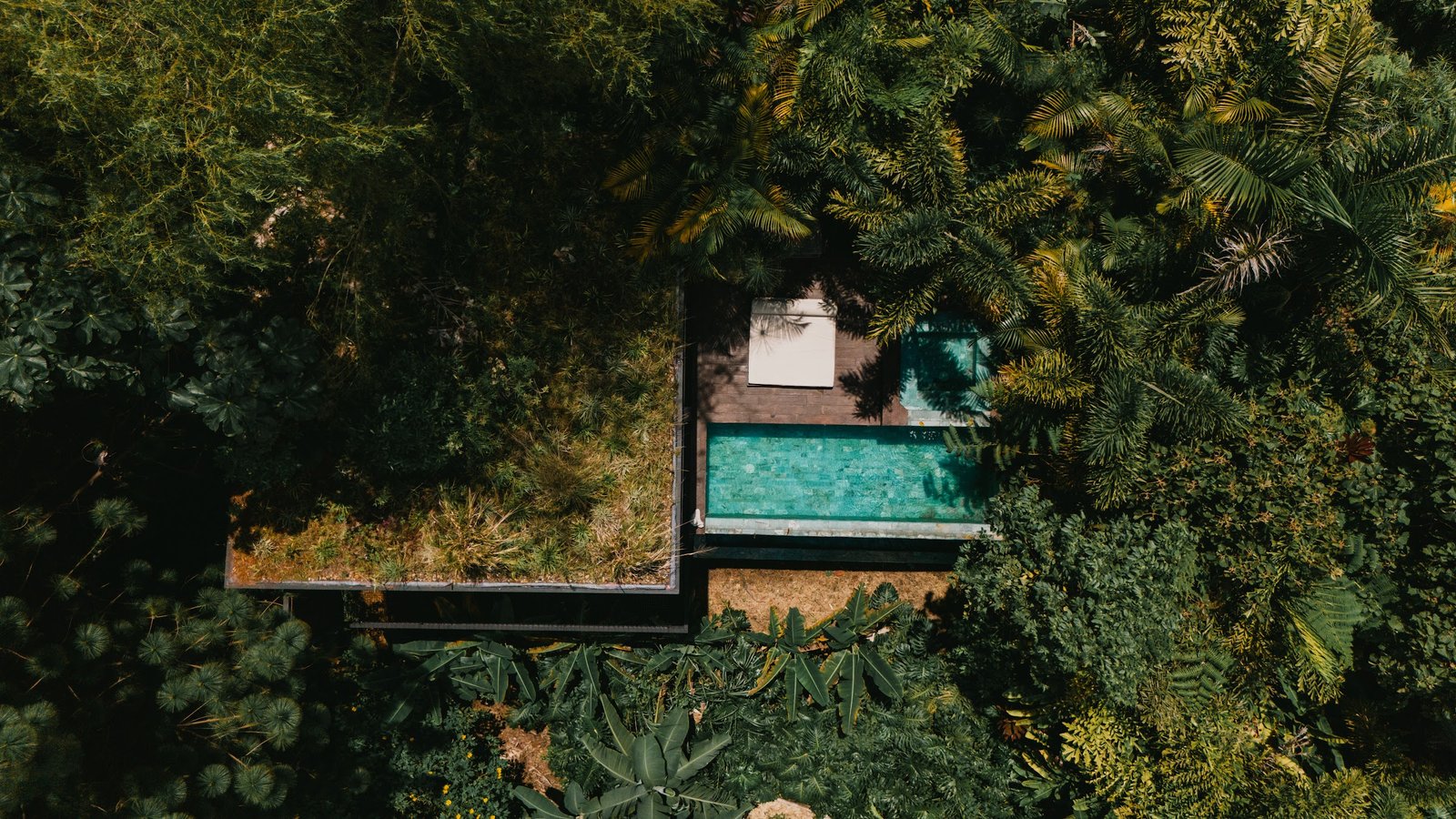
The first thing you notice from above is the roofs. At Biohabitat, photovoltaic panels are part of the architecture rather than an afterthought bolted on later. The buildings are contemporary, low and dark, and the solar surfaces sit within that language instead of fighting it.
This matters for a reason that goes beyond kilowatts. When sustainability is designed in from the first sketch, it stops being a compromise on beauty. If you are curious about that design thinking, I wrote about it in Architecture Inspired by the Forest, and in the design-led guide to where to stay in the coffee region.
Water that returns clean: wetlands and permaculture
Water is the quiet part of sustainability, and the part most hotels would rather not discuss. Here, wastewater is treated through constructed wetlands, a system where plants and soil do the work that machinery would otherwise do. It is slow, green and almost invisible, which is exactly why it is easy to overlook and worth asking about.
The same logic runs through the gardens. Permaculture, the practice of designing growing spaces to work like a natural ecosystem, shapes how the terraces are planted and how organic matter is returned to the soil. The result is a landscape that looks wild in the best way and is, in fact, carefully composed.
A native forest you can actually walk
The strongest proof of any eco hotel is its forest. At Biohabitat, the Bio Sendero is a 1.4 km trail that walks you through the property’s sustainable processes: the solar installation, the wetlands, the permaculture beds and the native trees being planted to extend the forest. It is the most tangible answer to the question “what do you actually do?”
Beyond that trail, the forest itself is the attraction:
- Birdwatching at dawn: a guided walk of about two hours through the forest, with more than 150 characterized bird species recorded on the property, some endemic to Quindío.
- The night trail: after dark, the forest changes completely. Amphibians, nocturnal monkeys and insects make it a different place from the one you saw at noon.
- Quiet hours: not every experience needs a guide. Sitting on a terrace while the mist lifts is, honestly, half the point.

Living inside the landscape: the habitats
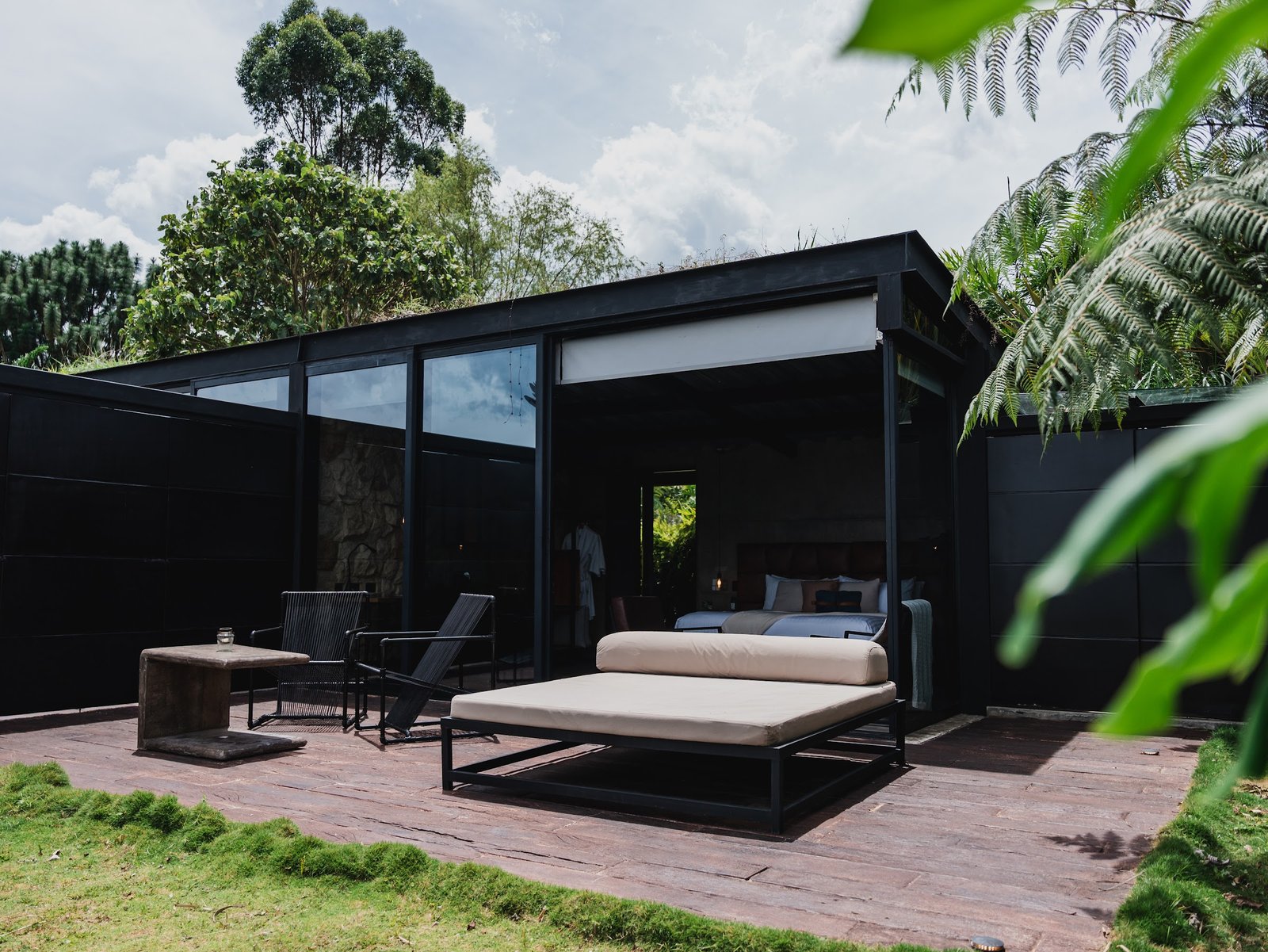
We call our accommodations habitats, not rooms, and the word is deliberate. Each one is conceived as a place within the forest: large glass walls, natural stone and wood, terraces that open to the canopy. You wake up to green rather than a curtain.
Look at how the structures meet the trees: ferns climbing to the terraces, tall trunks within arm’s reach of the glass. This is biophilic design in the literal sense, an architecture that wants to be next to life. You can see the full collection on our habitats page.
Wellness that follows the same logic
Sustainability and wellbeing are the same instinct seen from two sides: attention to what sustains life. The Bio Spa & Wellness sits within the forest, with treatments that look out at the vegetation instead of away from it. If rest is the reason for your trip, start with our wellness retreat guide to the coffee region or the slower rhythm of a yoga retreat in Quindío.
Food and the farm-to-table instinct
An eco hotel that serves food from far away is telling two stories at once. At Basto, the restaurant, the kitchen leans on the region: local coffee, seasonal produce, an idea of cooking that begins in the soil. I described the coffee side of that story in The Coffee Experience at Basto.
How to choose a genuine eco hotel: a quick checklist
- Ask for specifics. “We care about the environment” is not an answer. “Our wastewater is treated in wetlands” is.
- Look for a trail or a tour. A hotel proud of its practices will show them to you.
- Check the architecture. Does the building sit within the landscape, or in front of it?
- Look at the forest. Is there native vegetation, and is it growing?
- Taste the menu. Regional, seasonal, honest.
- Notice the quiet. A truly sustainable place is usually a calm one.
When to go and what to pair it with
The forest is lovely year-round, but timing changes the mood. Our month-by-month guide to the best time to visit will help you decide. Once you are here, pair the hotel’s own trails with a day in the Cocora Valley, and come back to a quiet place to rest. For the wider region, see Discover Quindío.
Frequently asked questions
Is there a true eco hotel in Quindío?
Yes, but verify it. Look for on-site solar energy, wastewater treatment, native reforestation and trails that let you see the processes yourself.
Do I have to give up comfort to stay somewhere sustainable?
No. The best eco hotels treat sustainability as a design brief, not a sacrifice. Glass, stone, wood, a pool, a spa and a serious kitchen can all coexist with a light footprint.
Can I see the sustainable practices during my stay?
At Biohabitat, yes: the Bio Sendero trail walks you through the solar, wetland, permaculture and native-tree processes.
Where it all comes together
An eco hotel should not ask you to believe it. It should let you walk its forest, taste its kitchen and sleep inside its architecture, and leave you feeling that staying lightly and living well are the same thing.
Ready to experience it? Explore our habitats and plan your stay in Quindío.
Biohabitat Hotel: architecture, nature, art, cuisine and wellness. A way of living.